
An educational farm welcomes school classes, families and holiday clubs. The signs there serve to guide, to explain and to protect the animals. They must be understood by a six-year-old and withstand rain as well as curious hands.
Three roles for a sign
Explain
The name of the animal, what it eats, what it produces. The difference between a nanny goat and a billy goat. The role of bees in the orchard. A well-made sign extends the activity, even when the leader is busy with another group.
Guide
An educational farm is often spread out: enclosures, vegetable garden, orchard, workshop room, picnic area, toilets. Clear signposting stops a group getting lost or a child going where they should not.
Protect
“Do not feed the animals”, “Do not touch”, “Non-drinking water”. These instructions protect the animals and the visitors. They must be understood without reading: a pictogram is better than a sentence.
Writing for children
- A very short title: the name of the animal or the place.
- One or two sentences, with simple words.
- A question that invites observation: “How many toes does the hen have?”.
- A drawing or a pictogram whenever possible.
Fit explanation signs at about 1.10 m: that is the eye level of a primary school child, and an adult can still read them without bending down.
Why wood
Wood blends in with the fences, enclosures and farm buildings. Above all, it is consistent with what the farm teaches: a natural, renewable material that can be worked with little energy. Explaining the cycle of nature on a plastic sign creates a mismatch that teachers notice.
Laser engraving leaves no ink or paint. It does not flake under fingers, even after hundreds of visits.
Which wood for outdoors
For signs fitted in the enclosures and along the trails, we engrave 18 mm okoume CTBX plywood protected by marine varnish. It stays stable outdoors, in the rain, where a thin board would warp.
For the workshop room, reception and toilets, 5 mm solid beech is enough. It is lighter and the engraving is more contrasted.
Six fitting tips
- Fix the signs out of reach of the animals: a goat eats wood.
- Place instructions at the entrance to each enclosure, not in the middle.
- Use the same pictograms throughout the farm.
- Number the stages of a trail: teachers use them to organise the visit.
- Avoid areas trampled by animals and the surroundings of water troughs.
- Plan a check of the fixings every spring.
Ordering a complete series
A farm often needs twenty to forty signs. Send us the list: the name of each animal or place, the text, the pictogram you want. We prepare the proof for the whole series, with your logo if you wish.
A complete project, with your logo and your texts? Ask for a quotation : proof and price within 48 h.
Matching signs
-
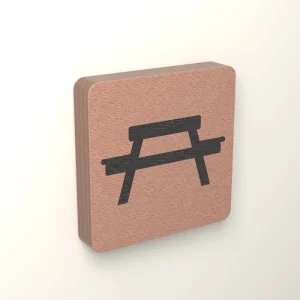
Wooden Picnic Area sign
Price range: 14,90 € through 34,90 € Select options This product has multiple variants. The options may be chosen on the product page -
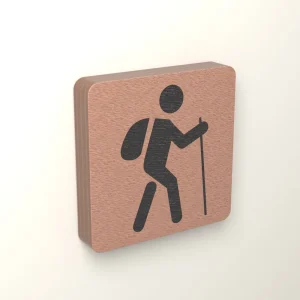
Wooden Hiking sign
Price range: 14,90 € through 34,90 € Select options This product has multiple variants. The options may be chosen on the product page -
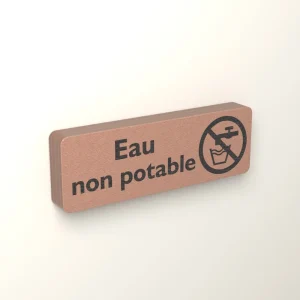
Wooden Non-Drinking Water plaque
Price range: 14,90 € through 54,90 € Select options This product has multiple variants. The options may be chosen on the product page -
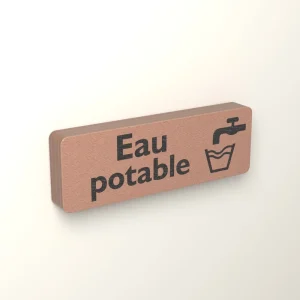
Wooden Drinking Water sign
Price range: 14,90 € through 54,90 € Select options This product has multiple variants. The options may be chosen on the product page -
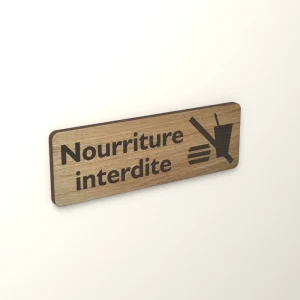
Wooden No Food sign
Price range: 14,90 € through 54,90 € Select options This product has multiple variants. The options may be chosen on the product page -
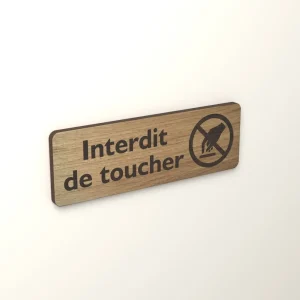
Wooden Do Not Touch sign
Price range: 14,90 € through 54,90 € Select options This product has multiple variants. The options may be chosen on the product page -
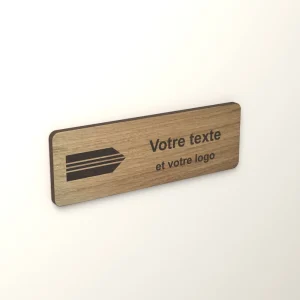
Customisable rectangular wooden plaque
Price range: 14,90 € through 54,90 € Select options This product has multiple variants. The options may be chosen on the product page